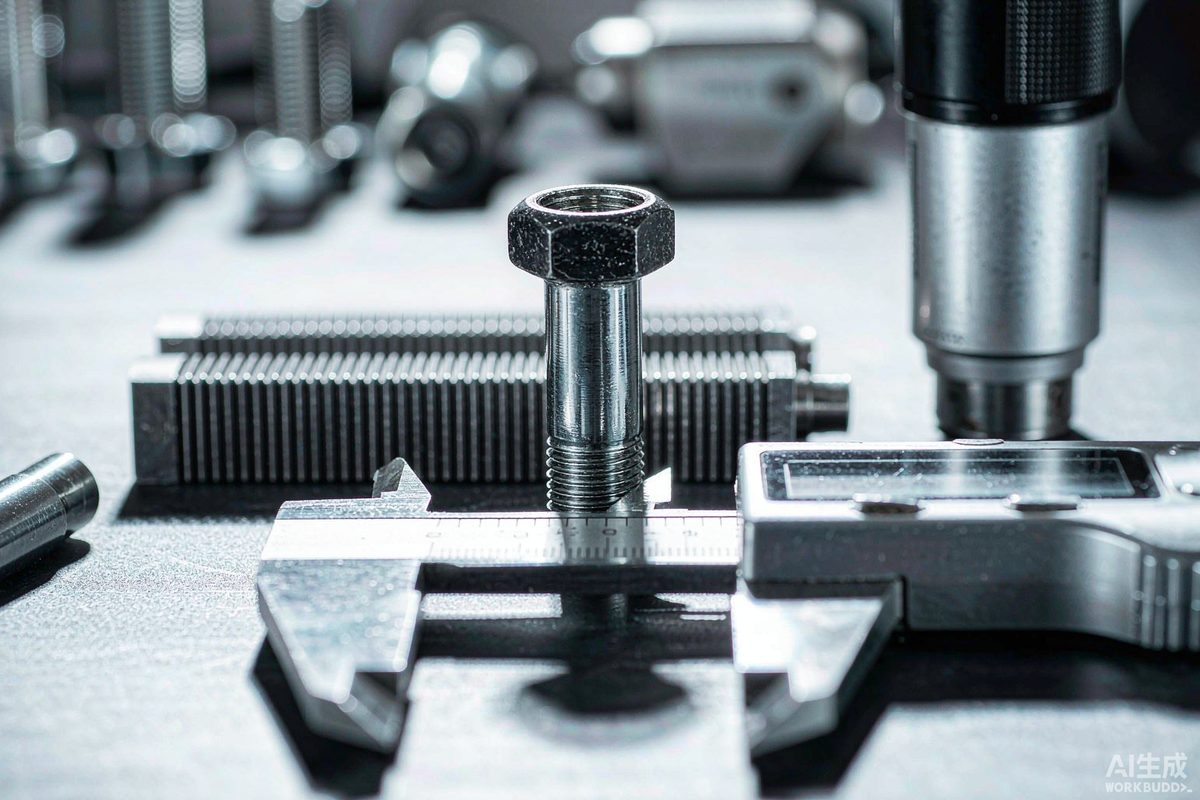
A tightened bolt does not come loose because the vibration "unscrews" it. It comes loose because the clamping force drops first, and then transverse movement walks the thread round. Once you understand that, the right locking method becomes obvious — and the popular ones stop looking so useful.
1. The real causes of preload loss
| Cause | What happens | Typical loss |
|---|---|---|
| Embedding (settling) | Surface roughness flattens under load in the first hours | 5–15 % of preload |
| Transverse slip | Joint slides sideways; the bolt rotates a little each cycle | Progressive until loose |
| Thermal cycling | Different expansion rates relieve preload | Variable, can be severe |
| Gasket creep | Soft gasket flows and thins | Common on flanged joints |
| Under-torquing | Never achieved design preload | The most common cause of all |
2. Six locking methods, honestly compared
| Method | How it works | Verdict |
|---|---|---|
| Spring washer (split lock washer) | Spring force against the nut | Largely ineffective — it flattens at normal preload. Widely used, rarely helps. |
| Nylon insert nut / nylon patch screw | Friction from the polymer | Good for moderate vibration; temperature limited (~120 °C); limited reuse |
| Threadlocker (anaerobic adhesive) | Fills the thread clearance, locks chemically | Excellent. Medium strength for serviceable joints, high strength for permanent. Needs clean threads and cure time |
| Wedge-locking washers (e.g. Nord-Lock type) | Cam geometry converts loosening rotation into lift | Best-in-class for heavy vibration; reusable; higher cost |
| Castellated nut + split pin | Mechanical positive lock | Positive and inspectable; needs a drilled bolt and a matching slot position |
| Safety wire | Wire prevents rotation | Aerospace / racing standard; skilled labour, single use |
If you only change one habit: tighten to a specified torque with a calibrated tool, in a star pattern on flanges, and re-check after the first 24 hours of operation. This recovers more joints than any locking device.
3. Torque is a friction measurement, not a strength measurement
Roughly 90 % of the applied torque goes into overcoming friction; only about 10 % becomes preload. That means a change in lubrication changes preload enormously — a lubricated bolt tightened to the "dry" torque value can be stretched past yield. Always state the friction condition alongside the torque figure.
4. Choosing by application
- Machine guards, covers: medium-strength threadlocker or nylon patch.
- Vibrating screens, crushers, engines: wedge washers or high-strength threadlocker + correct torque.
- Flanged pipe joints: star-pattern tightening, controlled friction, re-torque after thermal cycle.
- Safety-critical lifting / rotating parts: positive mechanical locking, never friction alone.
5. What to specify when ordering
- Fastener class (8.8 / 10.9 / A2-70 / A4-70) and coating
- Whether you need nylon patch, threadlocker pre-applied, or wedge washers supplied with the joint
- Torque specification and friction condition for the assembly instruction